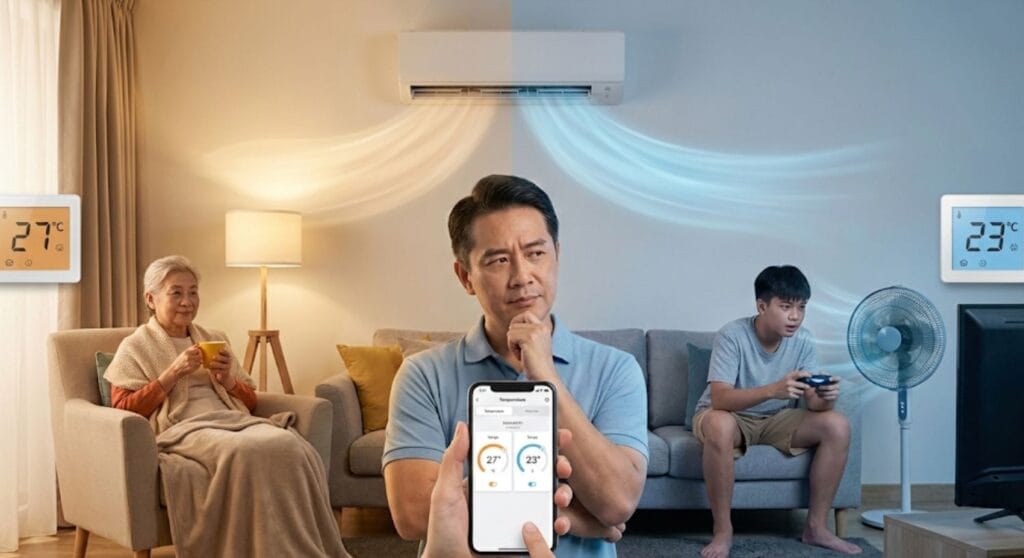
Grandma wraps herself in a blanket. Your teenager walks around in shorts complaining it’s still hot. You’re somewhere in the middle, just trying to keep everyone comfortable without the electricity bill hitting $300.
Welcome to multi-generational living in Singapore.
We visit these households regularly. Three generations under one roof. Sometimes four. Everyone has opinions about the aircon. Nobody agrees on what “comfortable” means.
The arguments we hear are almost identical across families. “Ma keeps turning off the aircon at night, then kids wake up sweating.” “My son sets it to 18°C, my mother-in-law gets joint pain.” “We run two different temperatures in two rooms and the electricity is killing us.”
This isn’t just about personal preference. There’s actual biology involved. And once you understand why different generations experience temperature differently, the solutions become clearer.
Why Elderly and Children Feel Temperature Differently
Not opinion. Science.
The Elderly Body Runs Colder
After age 65, the body’s ability to regulate temperature declines measurably. Blood circulation to extremities reduces. The layer of fat under skin thins out. Metabolism slows down.
Research from National University of Singapore found that elderly Singaporeans preferred ambient temperatures 2-3°C higher than adults aged 25-45. A room that feels perfect at 24°C for a working adult can feel genuinely cold to someone in their 70s.
This isn’t complaining. This isn’t being difficult. Their bodies physically experience the same temperature as colder.
Add to this: many elderly have arthritis or joint conditions that worsen with cold exposure. Air blowing directly from an aircon vent can trigger genuine discomfort, not just preference.
Children Run Hot
Kids are the opposite problem. Higher metabolic rate. More active throughout the day. Their bodies generate more heat per kilogram of body weight than adults.
A sleeping child’s body temperature also stays higher than an adult’s. That’s why children kick off blankets at night even in aircon rooms. Their bodies are trying to release heat.
Setting the bedroom at 25°C for your 8-year-old might mean they wake up sweating at 3am. Meanwhile grandma in the next room at 25°C needs two blankets.
Same temperature. Completely different experience.
The Middle Generation
Adults aged 30-55 generally have the most stable temperature regulation. But even here, differences exist. Someone who works outdoors all day acclimatises differently than someone in an air-conditioned office. Body weight, fitness level, hormonal changes, all these affect temperature perception.
In a multi-generational home, the parents often become the “temperature mediators.” Trying to find settings that don’t freeze the elderly or cook the children.
The Real Problem: One Thermostat for Multiple Needs
Most Singapore HDB flats have system aircon serving multiple rooms. One outdoor unit. Multiple indoor units. One thermostat controlling everything, or individual controls that still share the same compressor capacity.
This setup assumes everyone wants roughly the same temperature. Multi-generational families break that assumption completely.
We’ve seen families try various workarounds. Running only certain rooms. Closing vents in grandma’s room. Putting portable fans in children’s rooms to compensate.
None of these are real solutions. They’re compromises that leave everyone partially uncomfortable.
Solution 1: The Zone Approach
Proper zoning means treating different areas of your home as separate climate zones. Each zone gets cooling matched to its occupants.
Physical Separation Works Best
Elderly parents’ room should ideally have independent temperature control. Not just a separate indoor unit on the same system, but genuinely independent operation.
This might mean a dedicated single-split unit for their room. Yes, additional installation cost. But this unit can run at 26-27°C while children’s rooms run at 23-24°C. No conflict. No compromise.
The electricity math often surprises people. Running grandma’s room at 27°C uses significantly less energy than running it at 24°C. Even with an additional unit, your total consumption might not increase much because each unit runs at optimal efficiency for its zone.
Door Discipline Matters
Zoning only works if zones stay separate. This means keeping doors closed between different temperature areas.
Sounds obvious. But in practice, families leave doors open constantly. Kids running between rooms. Grandparents checking on grandchildren. The helper moving through the house.
Every open door mixes air between zones. Your carefully separated 24°C and 27°C zones become one lukewarm 25.5°C zone that satisfies nobody.
If your family naturally moves between rooms frequently, zoning becomes harder to maintain. Consider which rooms truly need separation versus which can share conditions.
Solution 2: Time-Based Temperature Shifts
Different generations often use spaces at different times. This creates opportunities.
Daytime vs Nighttime Needs
Grandparents often nap in the afternoon. Children are at school. Parents at work. The house has different occupants at different hours.
Program your aircon accordingly. Warmer settings during afternoon when elderly are the main occupants. Cooler settings in evening when everyone returns and children need to burn off energy. Moderate overnight settings that balance sleeping needs.
Modern aircon systems allow scheduling through apps. Set it once. Forget about daily adjustments.
The Bedroom Rotation Trick
Some families we work with use a rotation system. Elderly sleep in a naturally warmer room that needs less cooling. Children get the room with the most powerful aircon. Parents take the middle option.
Room assignment based on cooling needs rather than traditional “master bedroom goes to parents” thinking. Practical? Very. Requires rethinking assumptions? Also yes.
Solution 3: Supplementary Cooling and Heating
Sometimes the main aircon can’t satisfy everyone. Supplementary devices fill the gaps.
For Elderly: Targeted Warming
Rather than raising whole-house temperature for one person, add warming where needed.
Electric blankets for sleeping. Safe for elderly when used properly. They can keep their room at family-standard temperature but stay warm personally.
Space heaters in their room for when they feel cold. Sounds strange in Singapore, but we’ve installed small ceramic heaters in elderly bedrooms more than once. Used sparingly, they solve the problem without affecting whole-house cooling.
Redirect aircon vents away from elderly seating areas. A simple louver adjustment can make their favorite chair comfortable without changing temperature settings.
For Children: Enhanced Air Movement
Children often need air movement more than extreme cold. A ceiling fan combined with moderate aircon can feel cooler than aircon alone at lower temperature.
Standing fans in children’s rooms let them boost airflow without touching the aircon. Gives them control without affecting the system.
For teenagers who insist on arctic temperatures, portable aircon units in their room mean they can freeze themselves without freezing grandma. They pay the electricity difference. Fair arrangement.
Solution 4: Smart Aircon Controls
Technology has caught up with this problem. Several options now exist specifically for multi-temperature households.
Individual Room Sensors
Standard aircon measures temperature at the indoor unit location. If the unit is near the door and grandma sits by the window, the reading doesn’t reflect her actual experience.
Wireless temperature sensors placed where people actually sit give more accurate readings. Some systems can adjust cooling based on these remote sensors rather than the unit’s built-in sensor.
Grandma’s sensor reads 27°C even when the unit thinks the room is 25°C. The system responds to her actual conditions.
Smart Vents
Retrofit smart vents open and close automatically based on room conditions. Each room can set a target temperature. Vents adjust airflow to achieve that target.
Not a perfect solution since you’re still sharing one aircon system. But it provides more granular control than standard setups. Rooms that need more cooling get more airflow. Rooms that need less get restricted airflow.
Motion-Based Adjustments
Some smart systems detect room occupancy. When grandma’s room shows no motion, system reduces cooling there. When children return from school and motion sensors detect activity in their rooms, cooling increases there.
Automatic adjustment without anyone touching controls. Reduces the “who changed the temperature” arguments.
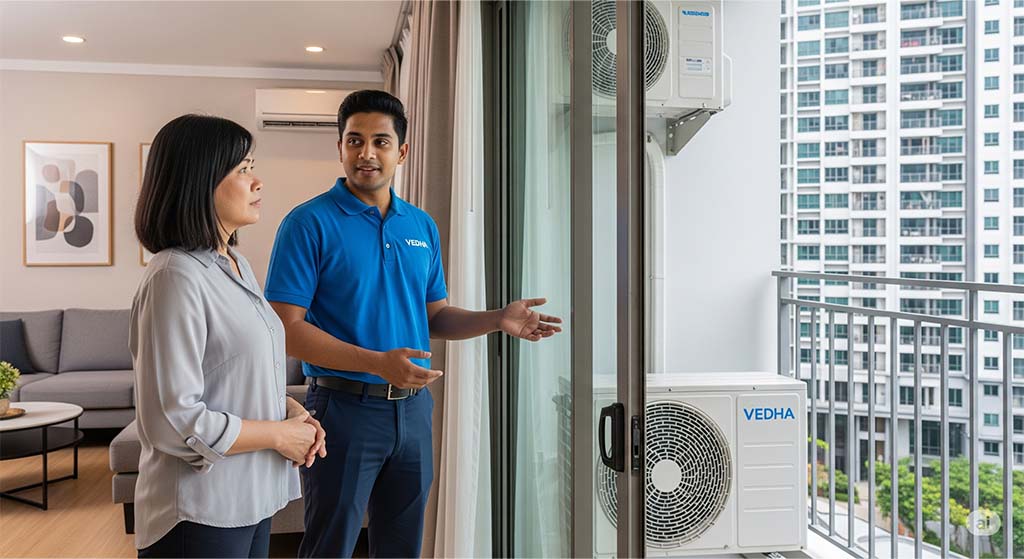
The Installation Conversation
When families approach us about multi-generational cooling, we ask specific questions.
How many generations? Ages of oldest and youngest members? Any medical conditions affecting temperature sensitivity? Which rooms does each generation primarily use? What are their sleeping schedules?
This isn’t just being thorough. The answers determine what setup makes sense.
A family with healthy, active grandparents in their 60s needs different solutions than one with frail elderly in their 80s. A household with teenage children has different needs than one with toddlers.
Cookie-cutter recommendations don’t work here. Every multi-generational household has its own dynamics.
Realistic Expectations and Compromises
We need to be honest about something. Perfect temperature for everyone in every room at every moment? Not achievable without spending more than most families want to spend.
What is achievable:
- Elderly won’t feel cold enough to be uncomfortable
- Children won’t sweat through their sleep
- Parents won’t arbitrate temperature wars daily
- Electricity bills stay reasonable
Some compromise will exist. Maybe grandma keeps a light cardigan handy for when she visits the children’s cooler rooms. Maybe teenagers accept 24°C instead of their preferred 20°C. Maybe everyone agrees to keep certain doors closed.
The goal is minimizing discomfort across all generations, not eliminating it entirely for any single person.
Common Mistakes We See
Mistake 1: One Powerful Unit Instead of Multiple Smaller Ones
Families think bigger is better. Install one powerful system to cool the whole flat.
Problem: one temperature for everyone. The powerful unit that makes children comfortable makes grandparents miserable. No flexibility.
Multiple smaller units with independent control cost similarly to one large system. But they provide the flexibility multi-generational homes actually need.
Mistake 2: Ignoring Humidity
Elderly often complain about aircon making them feel “dry” rather than cold. Their skin loses moisture faster. Air-conditioned environments accelerate this.
Solution isn’t raising temperature. It’s managing humidity. Running in dry mode occasionally. Using humidifiers in elderly rooms. Ensuring they drink enough water.
Sometimes what feels like “too cold” is actually “too dry.”
Mistake 3: Never Discussing Preferences
Families avoid the conversation. Everyone adjusts the thermostat secretly. Passive-aggressive temperature wars continue for years.
Sit down together. Acknowledge that different bodies have different needs. Agree on zones, schedules, and rules. A thirty-minute family discussion can prevent years of daily friction.
Health Considerations
This isn’t just comfort. It’s health.
Elderly and Temperature Regulation
Prolonged cold exposure in elderly can affect blood pressure, worsen respiratory conditions, and increase joint pain. The “just wear more clothes” solution has limits. Their bodies genuinely struggle to maintain core temperature in environments that feel fine to younger people.
If your elderly family members seem less active, more tired, or complain of aching joints in air-conditioned rooms, the temperature might be a contributing factor.
Children and Sleep Quality
Children who sleep too hot don’t sleep well. Poor sleep affects growth, learning, and immune function. A child who wakes up sweating multiple times per night accumulates sleep debt that shows up as behavioral issues, poor concentration, and frequent illness.
Proper cooling in children’s sleeping spaces is health investment, not luxury.
Working Adults and Productivity
Parents working from home in suboptimal temperatures show reduced productivity. Too hot means sluggish thinking. Too cold means distraction from discomfort.
Finding your productive temperature range and creating a workspace that maintains it has real economic value.
Making the Decision
Multi-generational aircon setup requires upfront thinking. What seems cheaper now often costs more over time through inefficiency, discomfort, and family friction.
Questions to consider:
- Will independent room control reduce conflicts enough to justify additional installation cost?
- Are supplementary devices (fans, heaters) a workable alternative?
- Can room assignments be reorganized to match cooling capacity with needs?
- What temperature compromises can each generation realistically accept?
No single answer fits all families. But asking these questions leads to better decisions than defaulting to standard installations that ignore generational differences.
Living with multiple generations means accommodating multiple temperature preferences. Your aircon system should support that reality instead of forcing everyone into one setting that works for nobody.
The families who solve this problem don’t just get comfortable homes. They get fewer daily arguments, better sleep across all ages, and a household where everyone can actually enjoy the space they share.
Need help designing an aircon setup for your multi-generational household? We’ve worked with many Singapore families facing exactly these challenges. Vedha Construction offers consultations that consider all family members’ needs. Call 96540044 or book through our website.

We specialize in Aircon installation, repair, and service. We have all type & model of recon compressor, full set & fancoil. Our technicians are highly proficient in their respective field and repairs and fixes aircon of various brands.