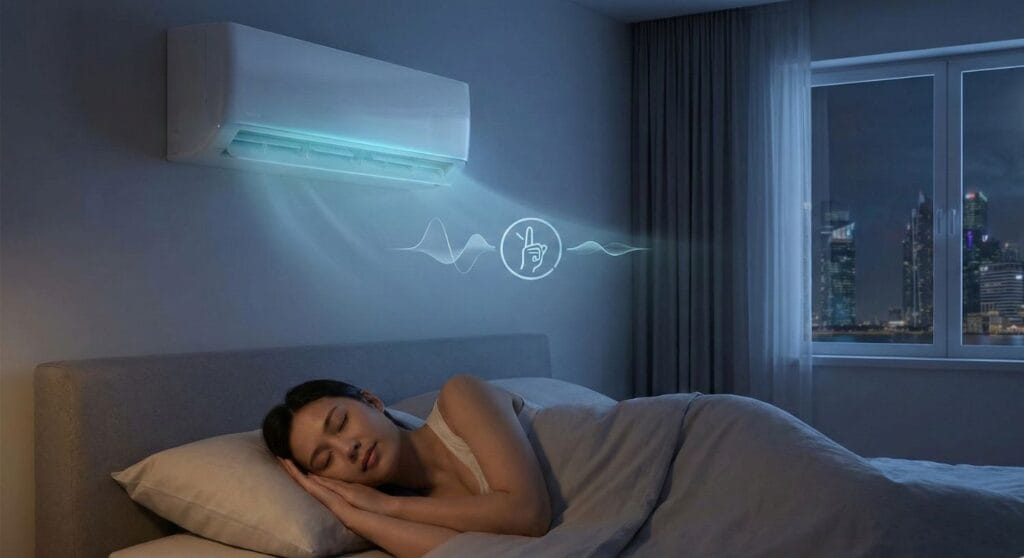
Aircon Setup for Multi-Generational Homes: When Parents and Kids Need Different Temperatures
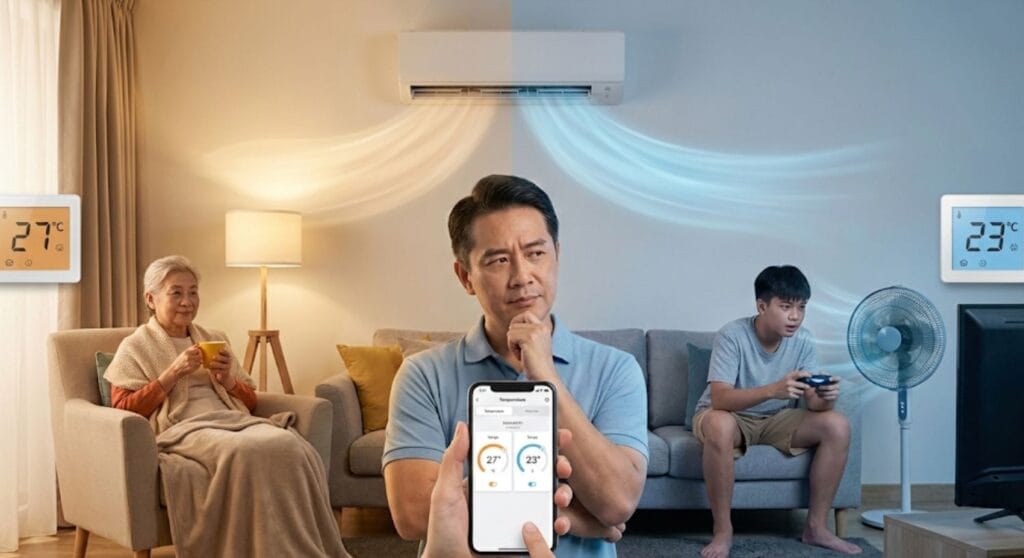
Grandma wraps herself in a blanket. Your teenager walks around in shorts complaining it’s still hot. You’re somewhere in the middle, just trying to keep everyone comfortable without the electricity bill hitting $300. Welcome to multi-generational living in Singapore. We visit these households regularly. Three generations under one roof. Sometimes four. Everyone has opinions about the aircon. Nobody agrees on what “comfortable” means. The arguments we hear are almost identical across families. “Ma keeps turning off the aircon at night, then kids wake up sweating.” “My son sets it to 18°C, my mother-in-law gets joint pain.” “We run two different temperatures in two rooms and the electricity is killing us.” This isn’t just about personal preference. There’s actual biology involved. And once you understand why different generations experience temperature differently, the solutions become clearer. Why Elderly and Children Feel Temperature Differently Not opinion. Science. The Elderly Body Runs Colder After age 65, the body’s ability to regulate temperature declines measurably. Blood circulation to extremities reduces. The layer of fat under skin thins out. Metabolism slows down. Research from National University of Singapore found that elderly Singaporeans preferred ambient temperatures 2-3°C higher than adults aged 25-45. A room that feels perfect at 24°C for a working adult can feel genuinely cold to someone in their 70s. This isn’t complaining. This isn’t being difficult. Their bodies physically experience the same temperature as colder. Add to this: many elderly have arthritis or joint conditions that worsen with cold exposure. Air blowing directly from an aircon vent can trigger genuine discomfort, not just preference. Children Run Hot Kids are the opposite problem. Higher metabolic rate. More active throughout the day. Their bodies generate more heat per kilogram of body weight than adults. A sleeping child’s body temperature also stays higher than an adult’s. That’s why children kick off blankets at night even in aircon rooms. Their bodies are trying to release heat. Setting the bedroom at 25°C for your 8-year-old might mean they wake up sweating at 3am. Meanwhile grandma in the next room at 25°C needs two blankets. Same temperature. Completely different experience. The Middle Generation Adults aged 30-55 generally have the most stable temperature regulation. But even here, differences exist. Someone who works outdoors all day acclimatises differently than someone in an air-conditioned office. Body weight, fitness level, hormonal changes, all these affect temperature perception. In a multi-generational home, the parents often become the “temperature mediators.” Trying to find settings that don’t freeze the elderly or cook the children. The Real Problem: One Thermostat for Multiple Needs Most Singapore HDB flats have system aircon serving multiple rooms. One outdoor unit. Multiple indoor units. One thermostat controlling everything, or individual controls that still share the same compressor capacity. This setup assumes everyone wants roughly the same temperature. Multi-generational families break that assumption completely. We’ve seen families try various workarounds. Running only certain rooms. Closing vents in grandma’s room. Putting portable fans in children’s rooms to compensate. None of these are real solutions. They’re compromises that leave everyone partially uncomfortable. Solution 1: The Zone Approach Proper zoning means treating different areas of your home as separate climate zones. Each zone gets cooling matched to its occupants. Physical Separation Works Best Elderly parents’ room should ideally have independent temperature control. Not just a separate indoor unit on the same system, but genuinely independent operation. This might mean a dedicated single-split unit for their room. Yes, additional installation cost. But this unit can run at 26-27°C while children’s rooms run at 23-24°C. No conflict. No compromise. The electricity math often surprises people. Running grandma’s room at 27°C uses significantly less energy than running it at 24°C. Even with an additional unit, your total consumption might not increase much because each unit runs at optimal efficiency for its zone. Door Discipline Matters Zoning only works if zones stay separate. This means keeping doors closed between different temperature areas. Sounds obvious. But in practice, families leave doors open constantly. Kids running between rooms. Grandparents checking on grandchildren. The helper moving through the house. Every open door mixes air between zones. Your carefully separated 24°C and 27°C zones become one lukewarm 25.5°C zone that satisfies nobody. If your family naturally moves between rooms frequently, zoning becomes harder to maintain. Consider which rooms truly need separation versus which can share conditions. Solution 2: Time-Based Temperature Shifts Different generations often use spaces at different times. This creates opportunities. Daytime vs Nighttime Needs Grandparents often nap in the afternoon. Children are at school. Parents at work. The house has different occupants at different hours. Program your aircon accordingly. Warmer settings during afternoon when elderly are the main occupants. Cooler settings in evening when everyone returns and children need to burn off energy. Moderate overnight settings that balance sleeping needs. Modern aircon systems allow scheduling through apps. Set it once. Forget about daily adjustments. The Bedroom Rotation Trick Some families we work with use a rotation system. Elderly sleep in a naturally warmer room that needs less cooling. Children get the room with the most powerful aircon. Parents take the middle option. Room assignment based on cooling needs rather than traditional “master bedroom goes to parents” thinking. Practical? Very. Requires rethinking assumptions? Also yes. Solution 3: Supplementary Cooling and Heating Sometimes the main aircon can’t satisfy everyone. Supplementary devices fill the gaps. For Elderly: Targeted Warming Rather than raising whole-house temperature for one person, add warming where needed. Electric blankets for sleeping. Safe for elderly when used properly. They can keep their room at family-standard temperature but stay warm personally. Space heaters in their room for when they feel cold. Sounds strange in Singapore, but we’ve installed small ceramic heaters in elderly bedrooms more than once. Used sparingly, they solve the problem without affecting whole-house cooling. Redirect aircon vents away from elderly seating areas. A simple louver adjustment can make their favorite chair comfortable without changing temperature settings. For Children: Enhanced Air Movement Children often need air movement more than extreme cold.